
Updated global Omega-3 index map


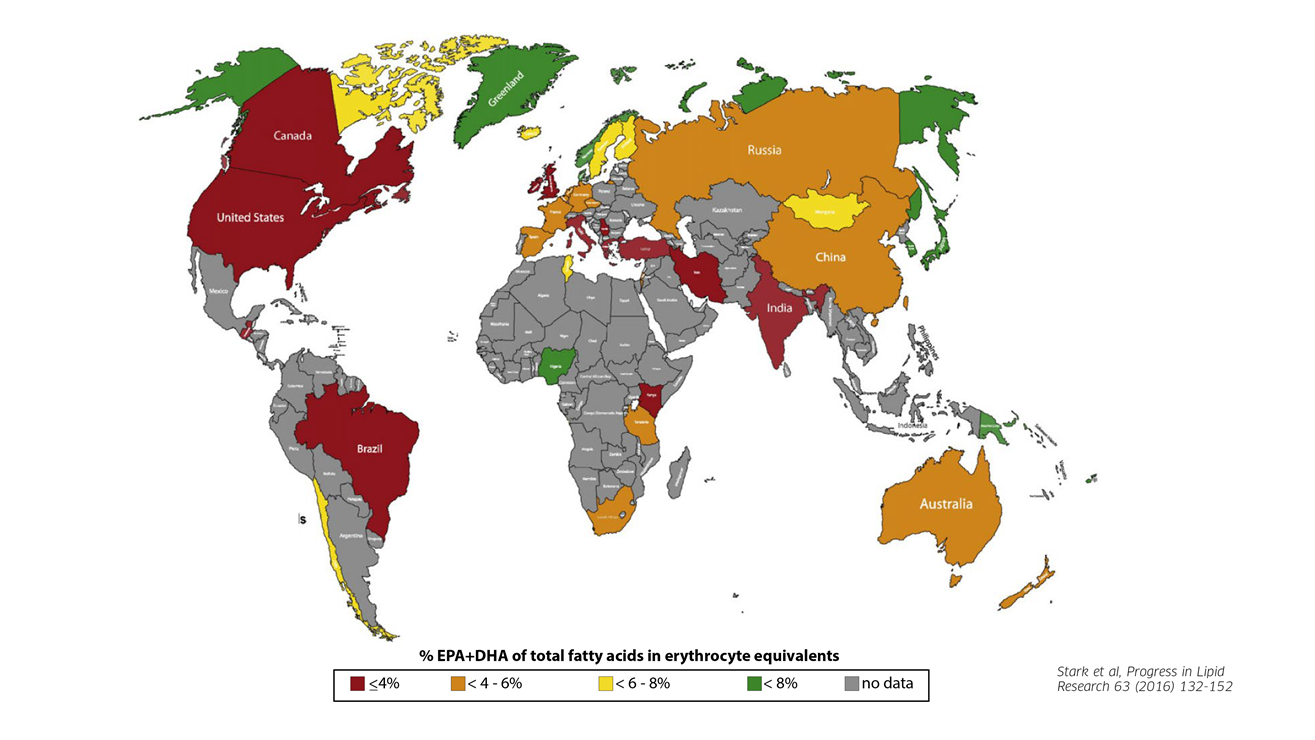
From a global health care perspective, it’s important to know what the average omega-3 index is in different countries. In 2016 Start et al published a global overview of omega-3 status [2], which quickly became well known to most in our industry, and a key reference for omega-3 status. Now at the 2024 GOED Exchange meeting in Athens, the team at FARI (Fatty acid research institute) presented an updated world map based on 334 studies. This is a commendable feat as studies often vary in populations and endpoints.
In 2016, this was the result of the study:
In 2023, the map has been updated as follows:
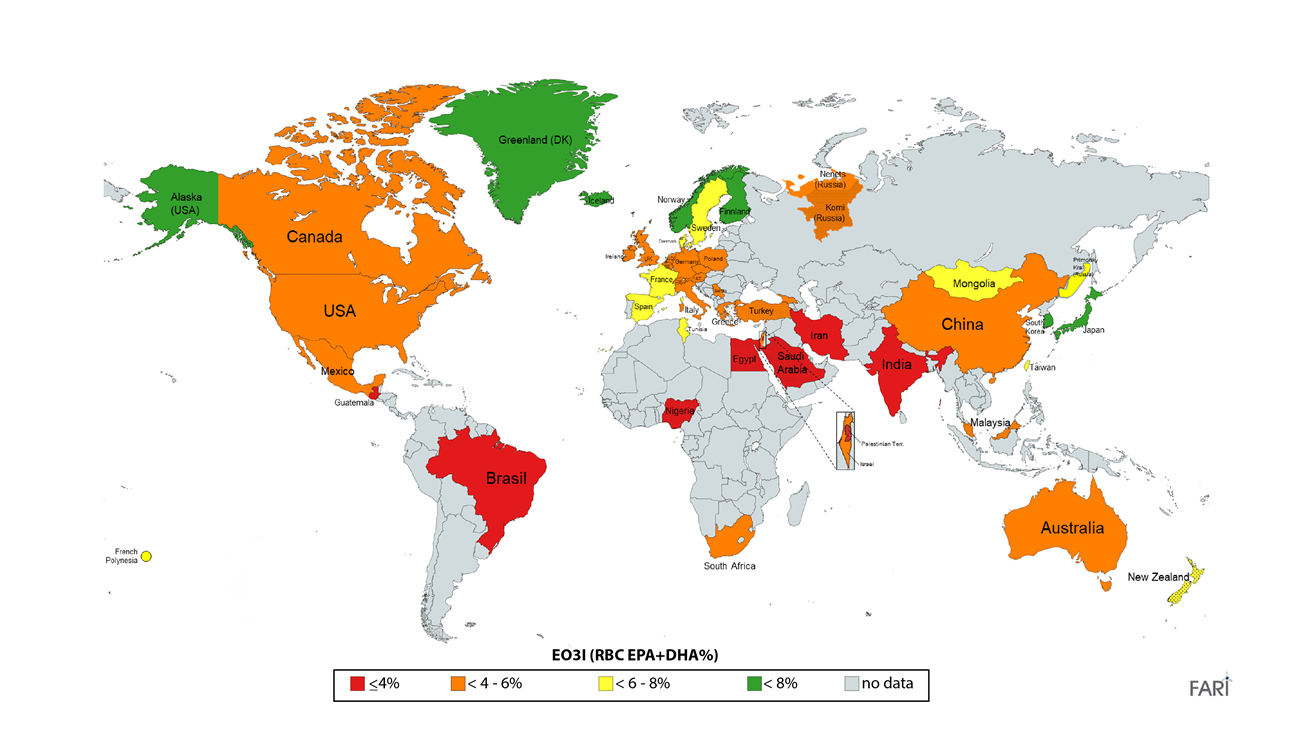
There is good news in the results. Many countries have an omega-3 index higher than estimated by Stark. The UK, USA, Mexico, Canada, Italy Turkey and Greece increased from >4% to 4-6%, and the authors discuss whether this is analytical or true improvements. Some countries have dropped out of the analysis presumably due to insufficient data. And countries such as Brazil and India continue to have low index numbers.
The take home message from this work is clear: almost all countries with index measurements need to increase their average omega-3 index. A simple message for improving a country´s health status.
References
1. Harris, W.S., et al., Blood n-3 fatty acid levels and total and cause-specific mortality from 17 prospective studies. Nat Commun, 2021. 12(1): p. 2329.
2. Stark, K.D., et al., Global survey of the omega-3 fatty acids, docosahexaenoic acid and eicosapentaenoic acid in the blood stream of healthy adults. Prog Lipid Res, 2016. 63: p. 132-52.